DU1-Introduction to geology
DU1-Introduction to geology
12 O to Q terms
The following terms are included in the first chapter of the “GUIDE-INTERPRETER OF GEOTURISM” manual, created through EU ERASMUS Framework. Project name: GEOTUR: Validation and recognition of two competence units in geological tourism Project no. 2018-1-ES01-KA202-050397
- Obsidian
- Black volcanic glass. It is produced when lava high in silica (SiO2) cools rapidly, and solidifies without time for crystal growth.

- Oceanic crust
- A type of earth's crust thinner and denser than the continental crust, usually found under oceans. Oceanic crust is primarily composed of mafic rocks rich in iron and magnesium

- Oceanic trench
- Topographic depression of the sea floor, relatively narrow in width, but very long, in areas of convergent plate boundaries

- Organic Evolution
- Change of organisms over geologic time

- Orogenesis
- The process of mountain formation, especially by a folding and faulting of the earth's crust due to convergent plate movement and collision

- Paleokarst
- Karst features that are on ancient surfaces.
- Paleozoic
- An era occurring between 541 million and 252 million years ago, characterized by the advent of fish, insects, and reptiles.
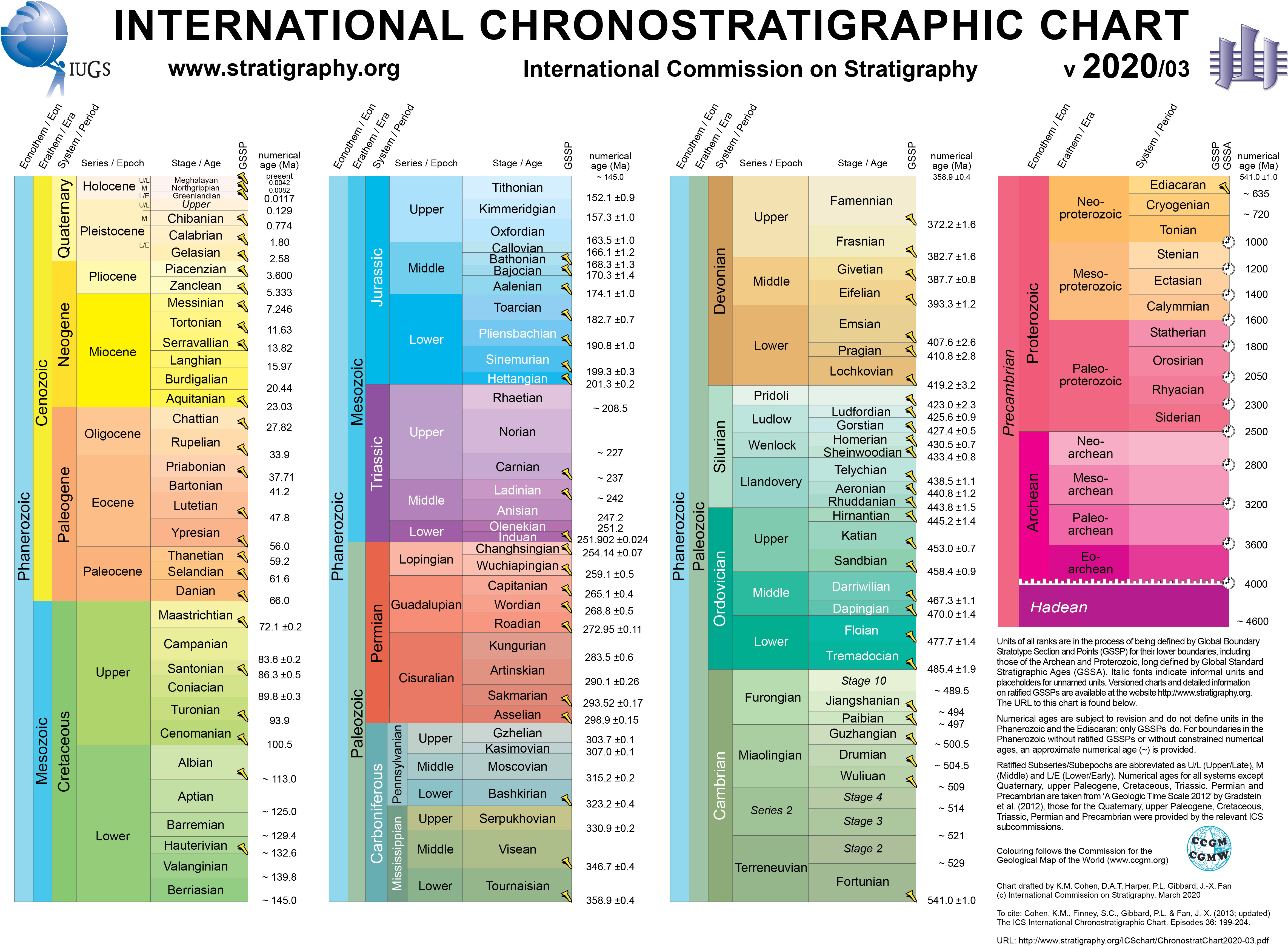
- Phanerozoic
- Current geological eon, and the one during which abundant animal and plant life has existed. It covers 541 million years to the present, and began with the Cambrian Period when diverse hard shelled animals first appeared.
- Pillow lava
- Lavas that contain characteristic pillow shaped structures that are attributed to the extrusion of the lava under water.

- Plate tectonics
- A theory in geology: the lithosphere of the Earth is divided into a number of plates which float on asthenosphere and travel independently. Much of the Earth's seismic activity occurs at the boundaries of these plates. Heat from the Earth's core causes convection currents in the mantle. These currents slowly move the plates around.

- Precambrian
- The earliest part of Earth's history, set before the current Phanerozoic Eon. The oldest cyanobacteria like fossils known are nearly 3.5 billion years old, among the oldest fossils currently known.

- Quaternary
- Is the current and most recent of the three periods of the Cenozoic Era in the geologic time scale.